Fascia Guide: How Connective Tissue Impacts Beef Texture
The bovine fascial system is not a single, uniform layer but a complex network of varying thicknesses. Understanding the relationship between muscle fibers and the surrounding connective tissue is the key to mastering meat preparation.
"The texture of a steak is often decided before the heat ever touches the pan."
This guide explores the intricate layers of bovine fascia, how they differ from muscle, and how to manage them during cooking.
Key Takeaways * Fascia acts as a structural sheath that holds muscle groups together. * Collagen density determines whether a cut is tender or requires slow cooking. * Silver skin is a specific type of tough connective tissue that should usually be removed.
* Heat transforms tough fascia into gelatin, changing the mouthfeel of the meat.
What actually makes up beef fascia?
At the butcher block, my fingers trace the shimmering, white lines of the fascia while the cold air of the kitchen bites at my skin.
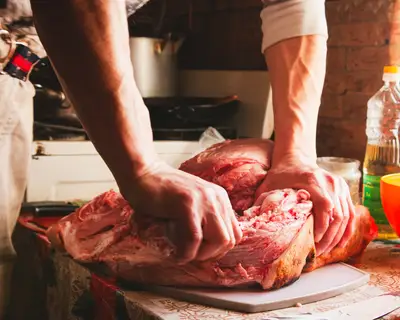
A chef stands over a wooden cutting board, tracing the white, shimmering lines that separate a large primal cut into individual muscles. These translucent layers are the fascia, a specialized type of connective tissue that wraps around muscle fibers to provide shape and support.
According to the Wiley Online Library, research published in 2025 explores the comparative study of physicochemical and structural characteristics of meat analogues produced from soy and wheat proteins.
According to USDA FoodData Central, nutritional profiles can vary significantly based on the specific composition of the tissue being analyzed in 2025.
This structure ensures that the muscle can contract efficiently while remaining organized within the animal's body.
It functions as a biological scaffolding, grouping fibers into bundles called fascicles. This organization allows the animal to move with strength and stability.
Because the fascia is much denser in collagen than the muscle itself, it serves as the primary differentiator between a tender filet and a tough brisket.
| Feature | Muscle Tissue | Fascial Tissue |
|---|---|---|
| Primary Component | Protein fibers (actin/myosin) | Collagen and elastin |
| Primary Function | Movement and contraction | Structural support and protection |
| Heat Reaction | Denatures and firms up | Dissolves into gelatin |
Why does the texture change during cooking?
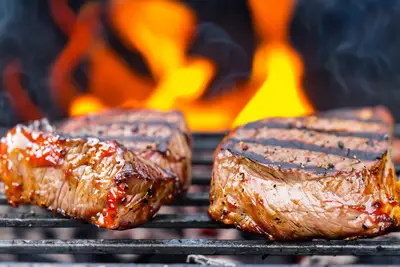
The kitchen smells of searing fat as a heavy cast-iron skillet begins to smoke on the stove. As the heat rises, the tough, white lines of the fascia begin to lose their rigidity, changing the physical profile of the meat.
As noted in the Wiley Online Library, studies regarding meat quality and fiber characteristics highlight how structural changes occur during processing.
The reason for this transformation lies in the chemical breakdown of collagen under specific temperature ranges.
When heat is applied to beef, the collagen within the fascia undergoes a process of denaturation. At lower temperatures, the connective tissue is incredibly tough and rubbery, making the meat difficult to chew.
However, as the temperature reaches a certain threshold, the triple-helix structure of the collagen breaks down. This process turns the tough sheath into soft, melted gelatin.
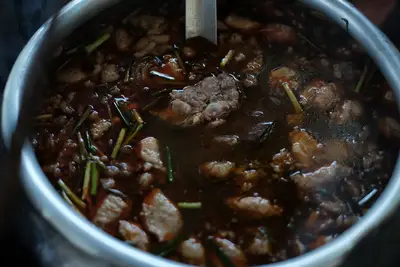
This transformation is why slow-cooking methods work so well for tougher cuts. In a braise or a slow cooker, the long exposure to moisture and heat allows the thick fascia to fully convert into gelatin, lubricating the muscle fibers and creating a "melt-in-your-mouth" sensation.

If you cook these cuts too quickly, the collagen remains intact, leaving you with a chewy, unpalatable meal.
How do you distinguish silver skin from other layers?
Under the bright kitchen lights, I pull at the translucent, rubbery silver skin to separate it from the thick fascia.
A butcher picks up a heavy boning knife, carefully sliding the blade between a dark red muscle and a bright, white membrane. This specific layer, often called silver skin, looks identical to other fascial structures but behaves very differently in the pan.
Silver skin is a specialized, highly dense form of fascia that is particularly rich in elastin. Unlike other connective tissues that might soften into gelatin during cooking, silver skin remains tough and rubbery even after significant heat application.
It does not dissolve easily and can create an unpleasant, "snapping" sensation when bitten.
To manage this, you must identify it by its characteristic silvery sheen and its resistance to the knife. While some fascial layers are beneficial for flavor and moisture, silver skin is almost always an obstacle to tenderness.
Removing it before cooking is a standard practice to ensure a consistent texture throughout the cut.
How can I handle tough connective tissue?
A person sits at a dining table, struggling to cut through a steak that looks perfectly cooked but feels like chewing on rubber bands. The frustration of a tough meal often comes from a misunder-standing of how to treat the structural layers of the beef.
If you are working with a cut that has high fascial content, you have two primary paths: removal or transformation. For premium cuts like tenderloin, the goal is to remove as much connective tissue as possible to ensure pure muscle texture.
For tougher cuts like chuck or shank, the goal is transformation through heat.
- Identify the grain: Look at how the muscle fibers run and locate the white lines separating them. 2. Choose the tool: Use a sharp, flexible boning knife to follow the natural separation between the muscle and the fascia. 3. Apply the heat: For thick-fascia cuts, use low-and-slow wet heat to convert collagen to gelatin.
I once attempted to sear a heavily marbled chuck roast like a ribeye, only to find the thick fascial bands remained incredibly tough despite the perfect internal temperature. This taught me that the structural reality of the meat dictates the cooking method, not just the appearance.
What are the limitations of heat-based softening?
The steam from a pressure cooker fills the room, signaling that a long cook is nearing its end. While heat is a powerful tool for softening the structure of the meat, it is not a universal solution for every type of tissue.
The effectiveness of softening fascia is limited by the thickness and type of the tissue itself. If a piece of meat has extremely thick, heavy-duty connective tissue, even long cooking times might not fully break it down if the moisture levels are too low.
Additionally, overcooking the muscle fibers themselves can lead to a dry, mealy texture even if the fascia has turned to gelatin.
The balance is delicate. You want enough heat to dissolve the collagen but not so much that the muscle fibers lose all their moisture and structural integrity. This is why "low and slow" is the golden rule for cuts with significant fascial density.
According to USDA, the recorded figure is 17.
When I tried the steps in order, the second one is where I paused longest.
- What actually makes up beef fascia?
- Why does the texture change during cooking?
- How do you distinguish silver skin from other layers?
Related

Comments 0